UX Research
*
December 2025
Dec 2025

AI skincare powered by user research

Tools

Figma

*
Wireframing
*
Prototyping
Wireframing
*
Prototyping

Perplexity AI

Research
*
Copywriting
*
Research
*
Copywriting

Mobbin

Ideation
*
Inspiration
*
Ideation
*
Inspiration
Role

UX Lead

Designer
*
Strategy
*
Research
*
User Flows
*
Prototyping
*
UI Design
*
Strategy
*
Research
*
User Flow
*
Prototyping
team

Solo project

Timeline

8 weeks

Dec 2025

Overview

From confusion, to confidence.

Conflicting advice. Wasted money. Frustration. For most people, skincare isn't a science—it's a guessing game.

Over eight weeks, I set out to answer a question: What if there was a trusted system that helped people feel confident with their skincare decisions — not confused.

The answer became Epidara: Cutting-edge AI technology meets dermatological expertise to create an intuitive system that analyzes individual skin needs and preferences to deliver tailored, science-backed recommendations.

The problem

Overwhelm is the real barrier.

The core problem isn't complexity of skincare science — it's decision paralysis in an endless marketplace. With thousands of products and conflicting information, users resort to trial-and-error: wasting time, money, and often making their skin worse in the process.

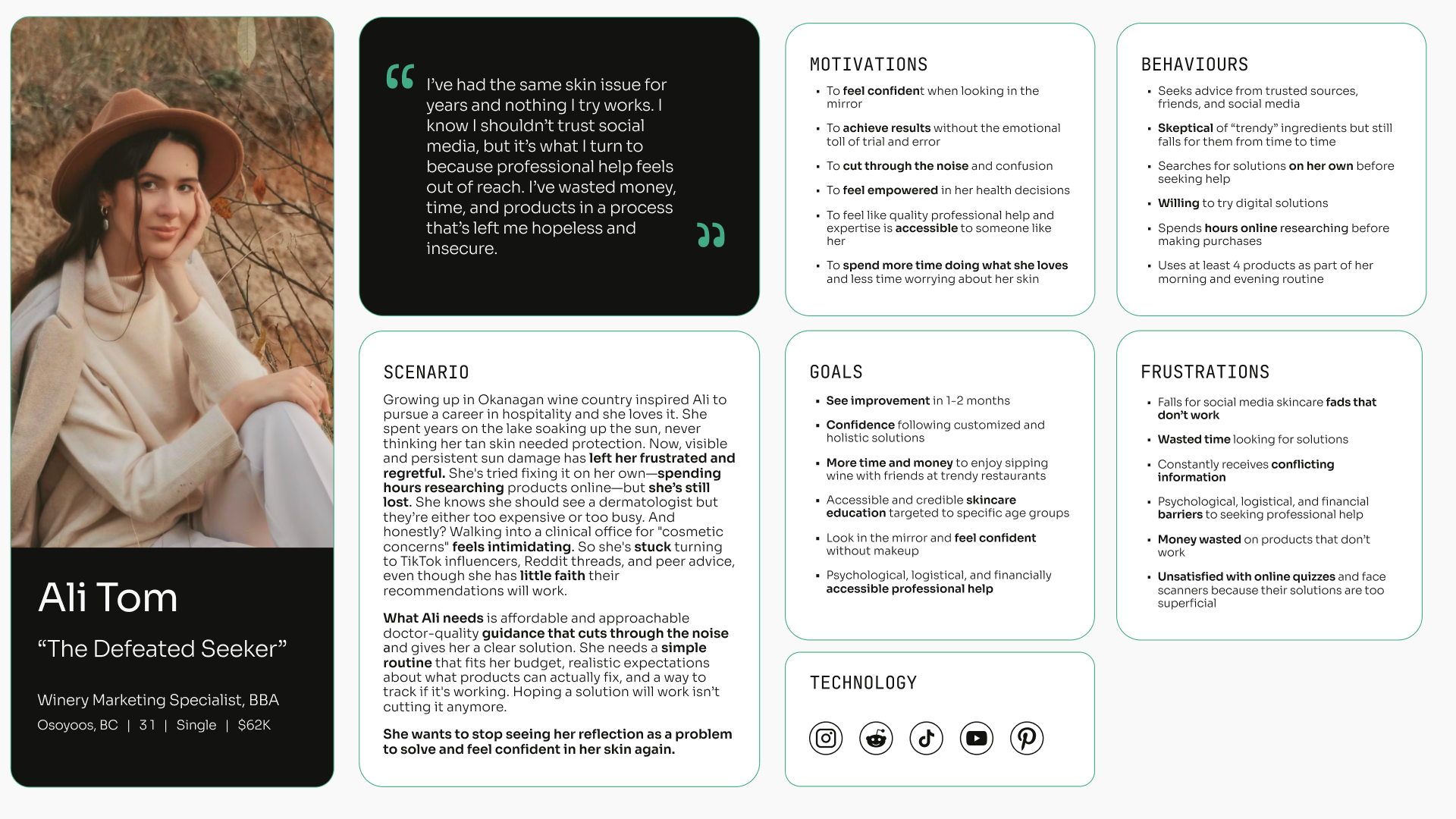
This affects everyone: beginners trying to build their first routine, experienced users looking to address specific concerns, and people with sensitive or compromised skin who can't afford to make mistakes.

Research

Moving from assumptions, to insight.

I started with hunches. Most of us do with skincare, we think we know what people need. But hunches aren't design.

My research approach

First, I ran a competitive analysis of existing skincare apps and recommendation tools. I looked at how they handled guidance, personalization, and simplification.

Then, before I moved to user interviews, I conducted secondary research to validate the assumptions I had about the problem space.

Next, I went to the source: I conducted user interviews and surveys to understand how real people navigate skincare decisions.

The interviews and surveys verified what I was finding in my secondary research: skincare users feel lost, frustrated, confused, and wish they could feel confident in their own skin.

55%

Purchased skincare to feel good about themselves

2 of 5

Interested in using tech to monitor skin health

27%

Gen Y & Z in debt buying skincare products

90%

Women frustrated buying products that don't deliver

User insights that shaped my solution.

01 Knowledge gap and need for guidance

Users feel lost navigating skincare decisions and turn to unreliable sources out of necessity rather than trust, because professional support is either inaccessible or intimidating.

02 personalization first

When asked what would make them confident in a skincare recommendation, users didn't mention ingredient lists or scientific backing first. They mentioned personalization. "Does this know my skin?" If a recommendation felt tailored to them specifically, they were more likely to trust it—even if they didn't fully understand the reasoning.

03 clarity over complexity

Users wanted to be educated, but not overwhelmed. They preferred a simple, guided onboarding that asked them questions about their skin rather than dumping them into a product catalog. The guidance should feel supportive, not scary.

The solution

Accessible, personalized, and 
evidence-based skincare guidance.

The solution wasn't to add more information. It was to make the right information feel personal.

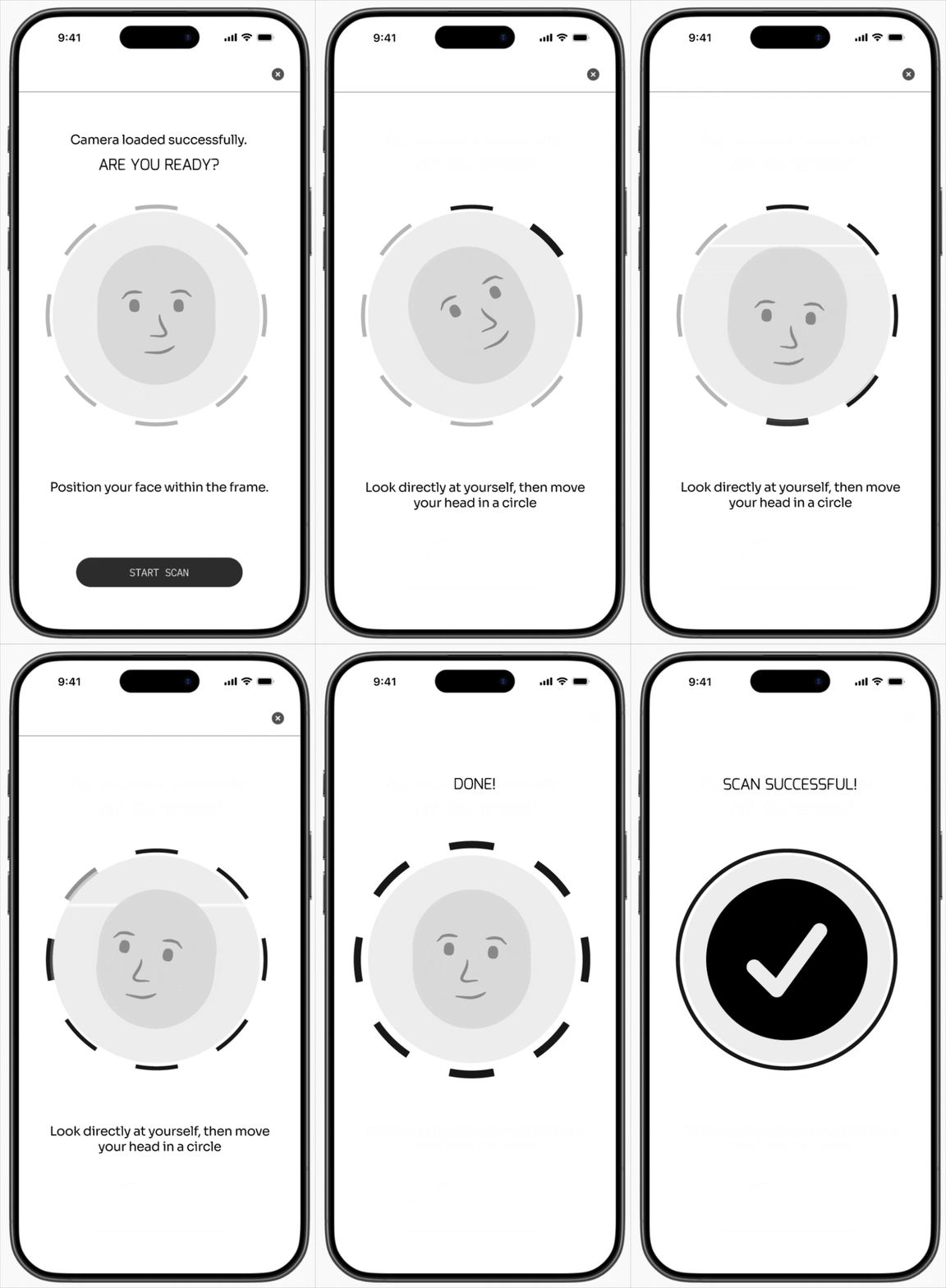
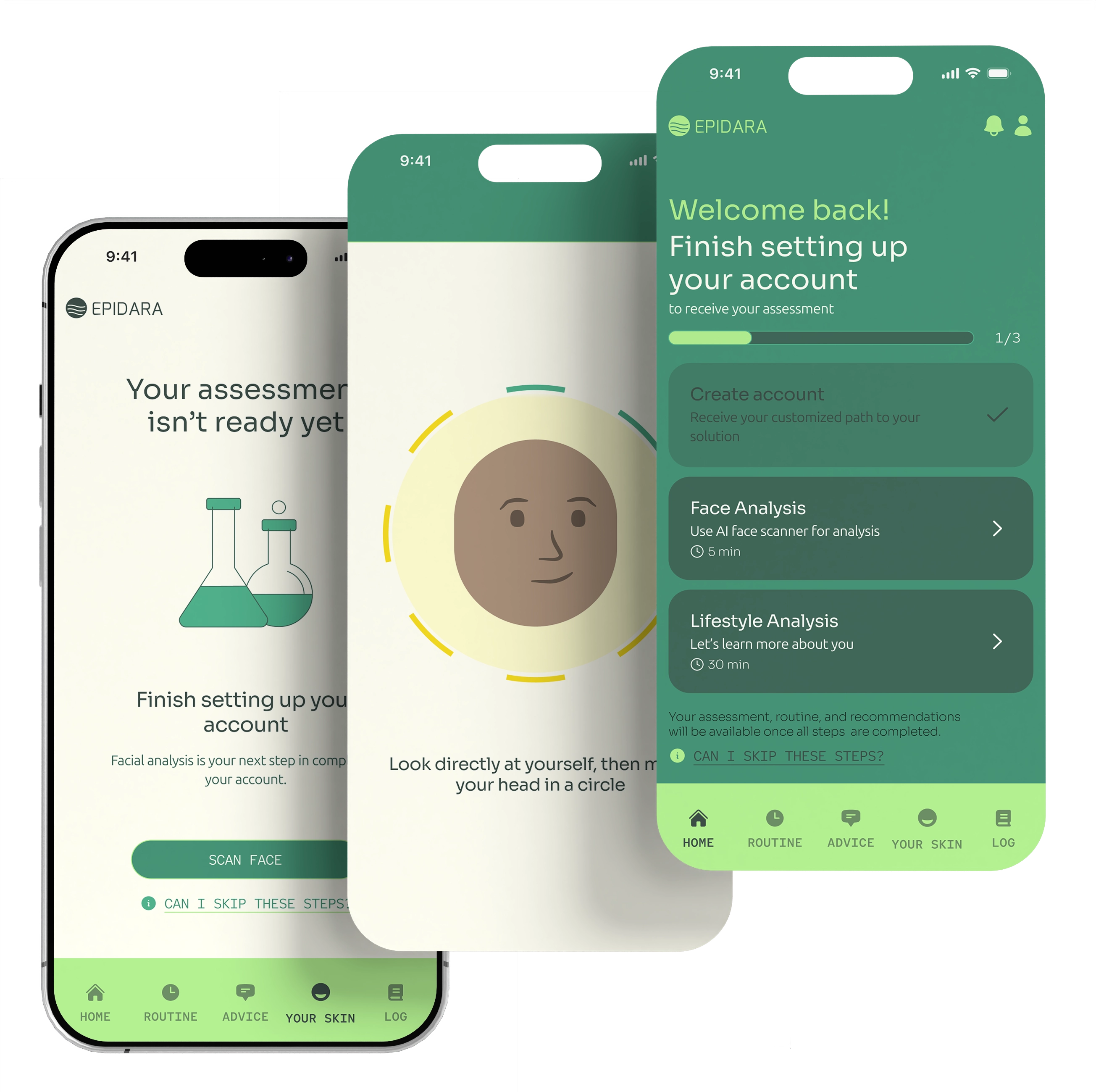
Epidara uses an AI facial scan combined with an intuitive assessment to gather what the app needs to know: your skin type, concerns, goals, and preferences. Instead of dumping recommendations on a user, the app builds a tailored routine step-by-step, explaining the "why" behind each suggestion.

Describing
design is one thing.

Feeling it, is another.

Try it yourself

Design Process

From concept to testable prototype.

The UI inspiration, sketching, user testing, and iterations that led to the mid-fidelity prototype.

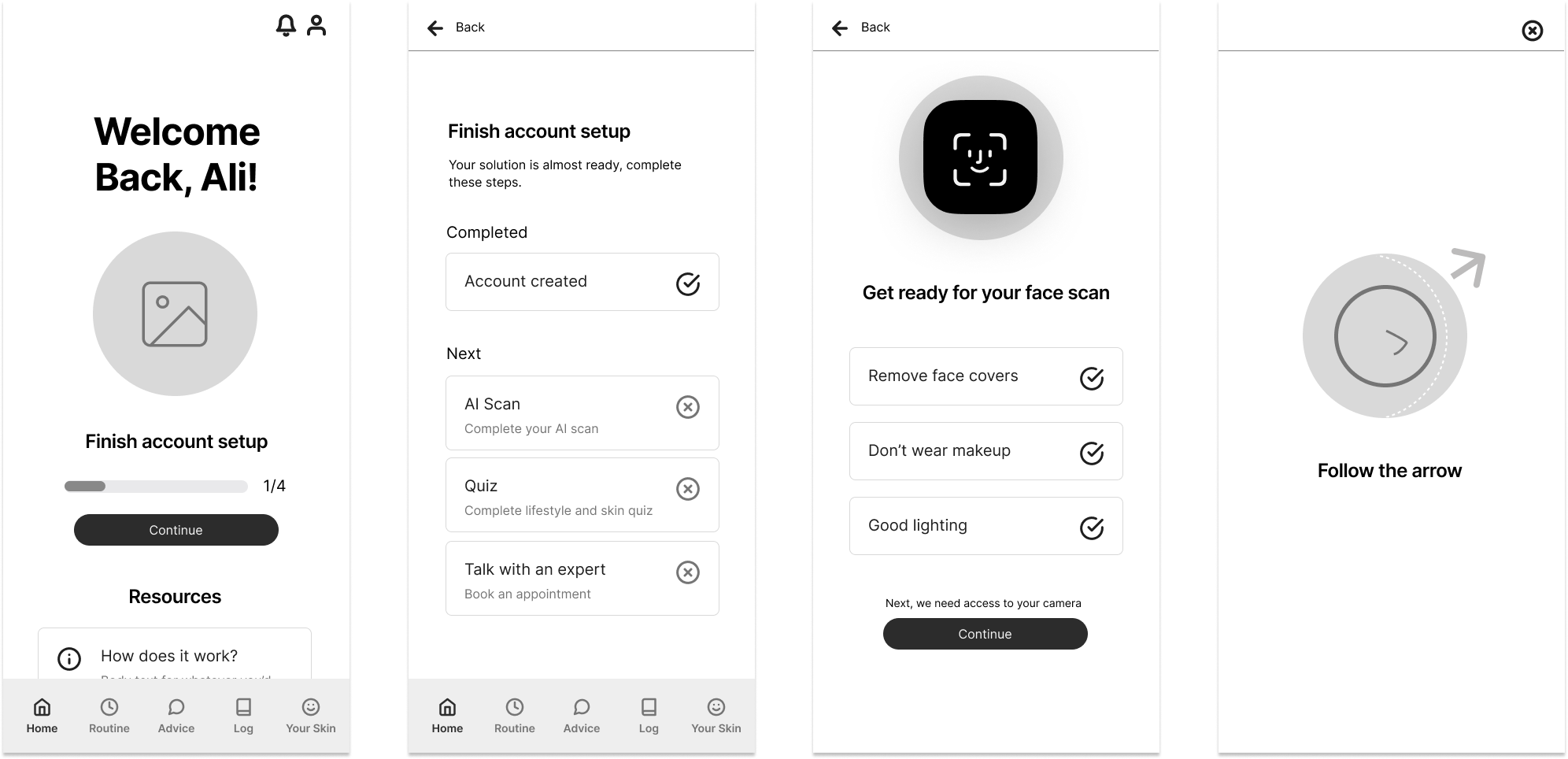
The prototype focused on one critical user flow: the AI facial analysis onboarding. This is where the app learns who you are and what your skin needs—the foundation for everything that follows.

01 UI Inspiration

Before sketching, I gathered inspiration from existing skincare apps and design systems to understand current patterns for onboarding, progress indicators, and micro-interactions. This lookbook informed my design decisions and helped me identify opportunities to differentiate Epidara's experience.

02 Sketching + Wireframing

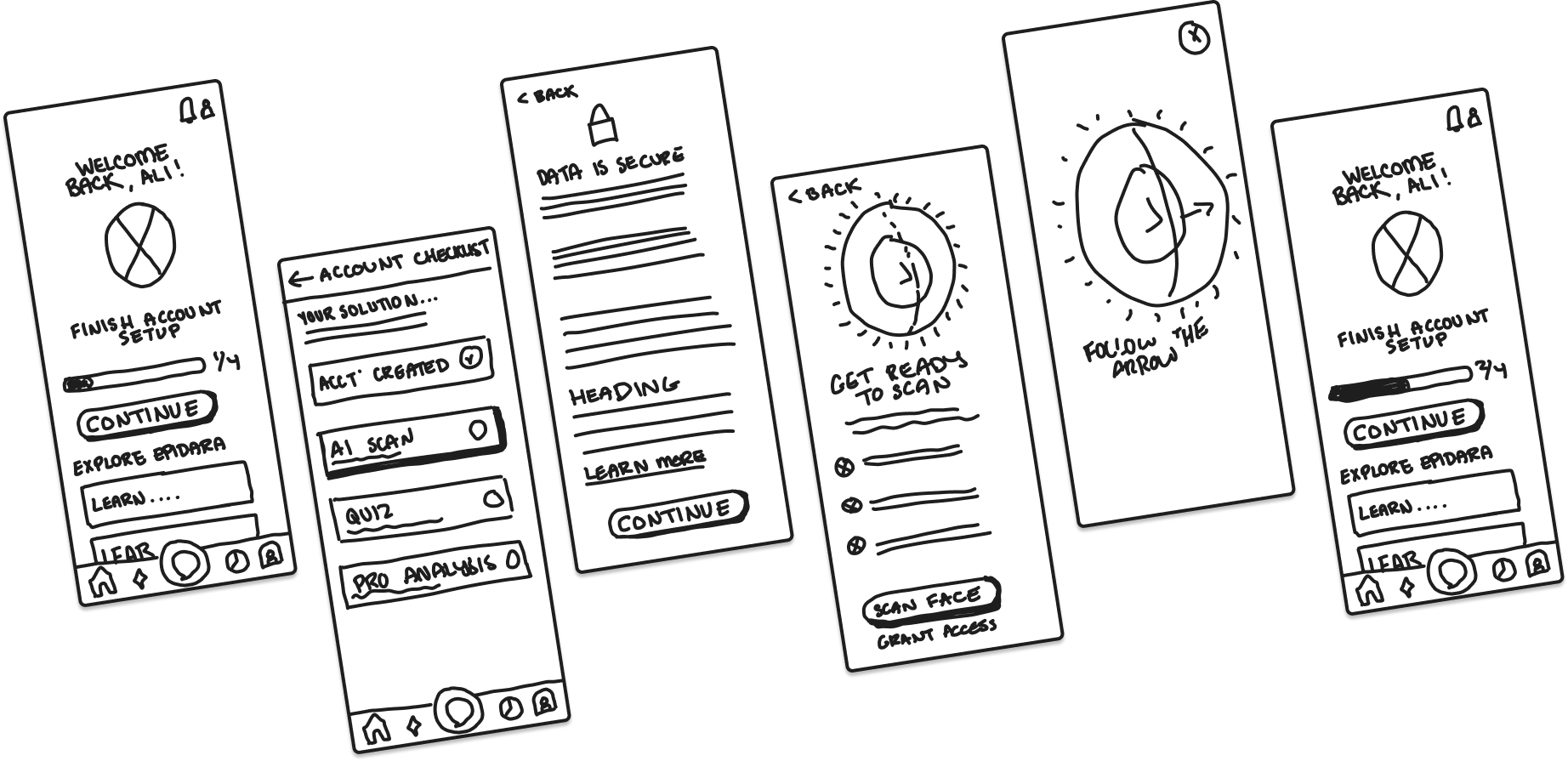
I started with rough sketches on paper and iPad, exploring how the face scan could work, how to break the assessment into digestible steps, and where users might get confused. Version 1 wireframes focused on clarity and logical flow.

03 User testing

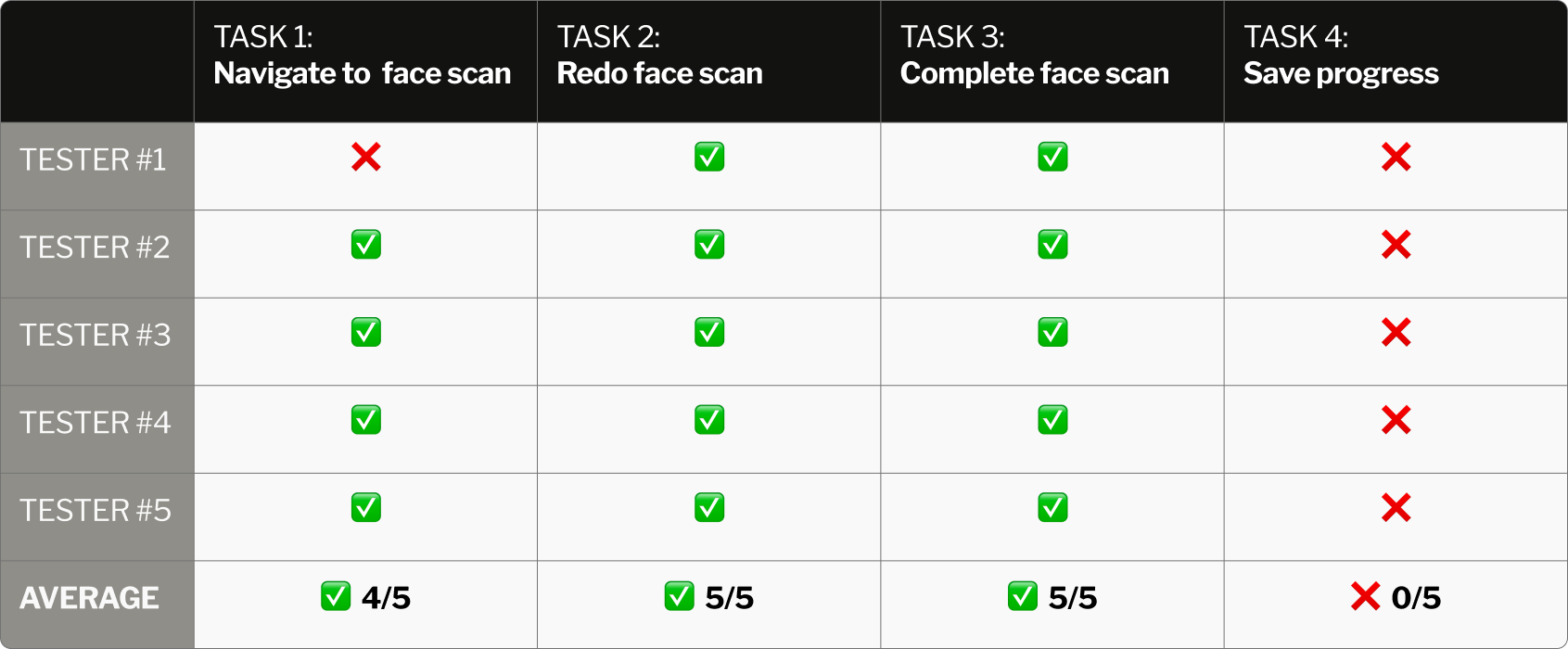
I tested my V1 wireframes with 5 users. The task: complete a face scan, answer the assessment, and save. Intentionally, I made the face scan fail on the first attempt to see how users would handle errors and recover from friction.

04 Iteration + Refinement

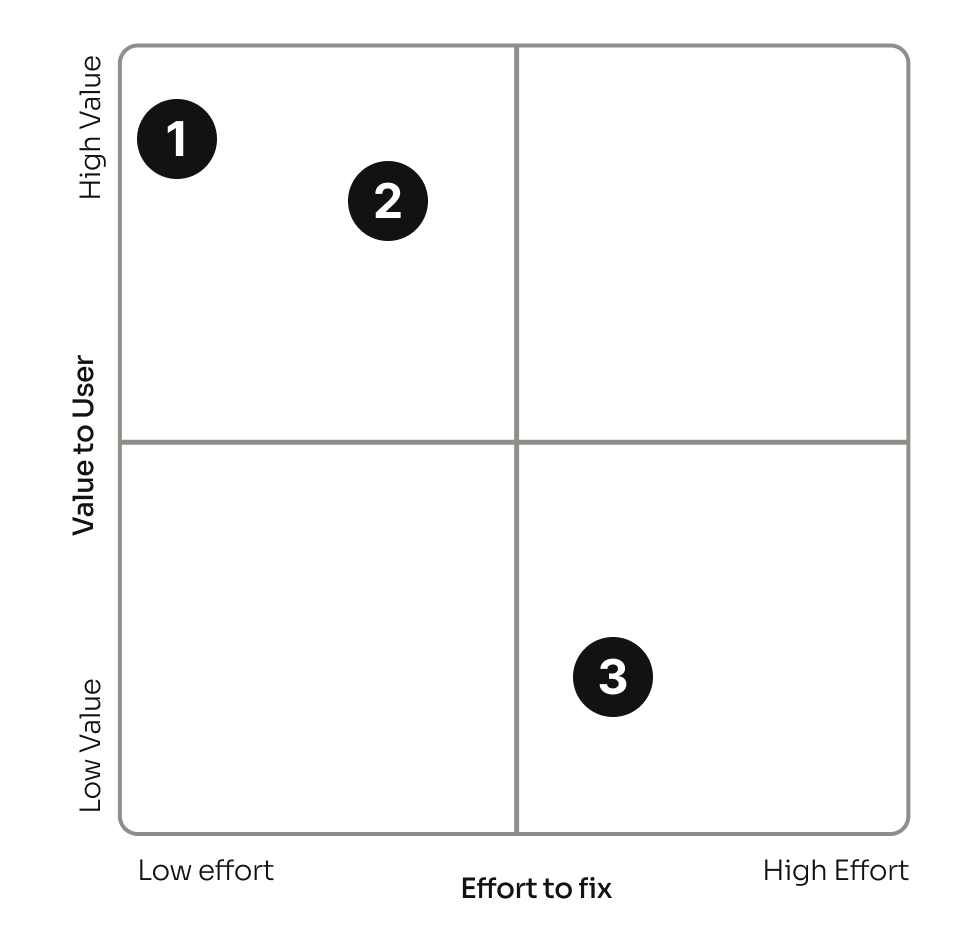
I prioritized findings using a design matrix: effort vs. impact. The camera access issue was high-impact, low-effort. Fixed. The others informed future testing strategy and design thinking, but didn't require immediate changes to this iteration.

Design Decisions

Decisions backed by research.

Focused onboarding through AI

Instead of a long form asking dozens of questions, the app starts with a facial scan and one guided quiz. This is a high-effort interaction, but it's front-loaded meaning users invest upfront to get personalized results for weeks. The AI does the heavy lifting, reducing the cognitive load on the user.

Progressive disclosure in the assessment

Users don't see all the questions at once. They answer progressively: skin type → concerns → goals → preferences. This prevents overwhelm and lets users exit at any point with useful data. Each step builds on the last, creating a sense of progress and control.

Supportive, trustworthy design

The visual design and copy had to feel both modern and reassuring. Not clinical or overly technical. I used a muted, natural color palette, clear typography, and language that felt like advice from someone who gets it—not a cold algorithm.

Outcomes

From insight to impact.

The design focuses on making the right information feel personal, manageable, and trustworthy. Here's how it delivers on the core goals.

Impact 01

Confidence through personalization

Instead of generic recommendations, users now get a tailored routine that reflects their unique skin. The AI scan + assessment creates a foundation for trust. Users feel heard, not sold to.

Impact 02

Clarity over overwhelm

The progressive disclosure approach breaks the scary into the manageable. Users answer questions at their own pace and see immediate progress. By the end, they have a clear routine and understand why each step matters.

Impact 03

A foundation for ongoing support

The onboarding isn't the end—it's the beginning. Epidara has all the data it needs to provide timely, contextual guidance as users' skin evolves. Future features could include routine adjustments and product recommendations.

Reflection

What the process taught me.

The big insight: Personalization isn't about having more features—it's about feeling seen. Users don't want an encyclopedia of skincare. They want someone (or something) that understands their specific situation and gives clear, confident advice.

Version 02 starts here

*
Hi-fi designs to bring colour into the app
*
More user flows built in the prototype— starting with the lifestyle analysis
*
AI experimentation with other tools for the advice section of the app
*
More user testing and more iterations

I started with a question:

How might we help people feel confident in their skincare choices?

Our answer:

Cutting-edge AI technology combined with dermatological expertise to create an intuitive system that analyzes individual skin needs and preferences to deliver tailored, science-backed recommendations.

Next project

Standing bold in botanicals